CORUS
A company remade: brand, website, IT and software under one roof
CORUS is a Swiss construction company with around 30 employees. In the summer of 2026 the company remade itself: new legal form, new name, new brand, new domain. We took on that whole transition as a single engagement - from the business cards to the migration night. On 1 July 2026, everything went live together.
The change
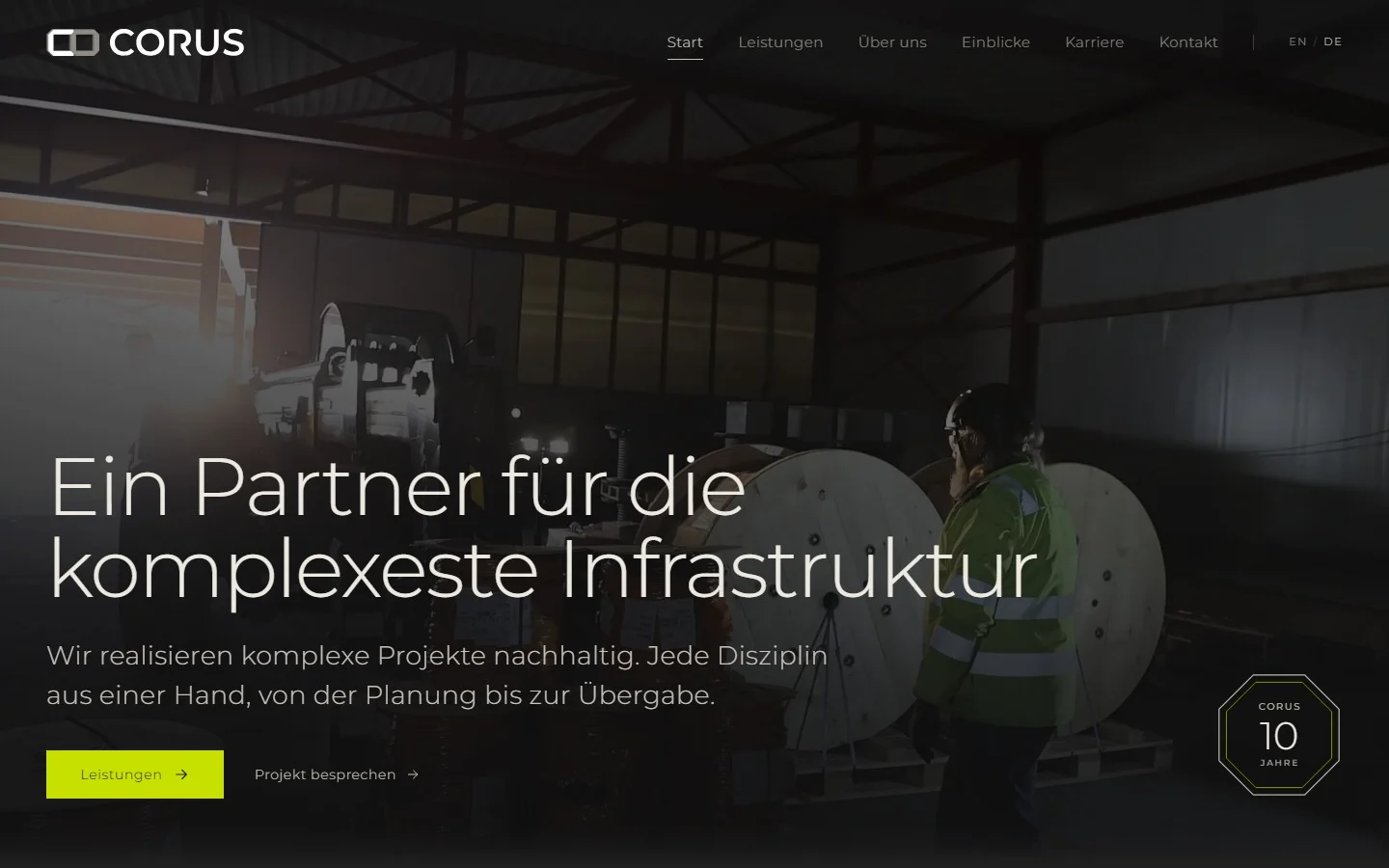
For ten years the company operated under a name that barely fit on a business card: CORUS Russo & Partner Engineering + Consulting KmG. That's what the site signs said, how every email address introduced itself, and the website ran on corus-engineering.ch.
On its tenth anniversary, CORUS took the big step: the limited partnership became CORUS (Switzerland) AG - a shorter name, a new legal form, a new public face. The matching domain corus.ag came in with the rebrand. Rename a company and you change everything that carries the name: the logo, the website, every email address, every template, every vehicle, every sign. That was the engagement.
The engagement: everything from one place
A change like this would normally take five suppliers: a brand agency, a web company, a software developer, an IT provider, an AI consultant. Five proposals, five briefings, five schedules that someone would have to keep in sync. CORUS gave the entire engagement to one place instead.
We cut it into five areas: brand, website, M365 migration, AI enablement and ongoing operations. Each area got a fixed price and a defined package, paid in tranches as the work progressed. Fixed prices also meant the overrun risk sat with us, not with CORUS.
From contract start in early May to go-live on 1 July, there were eight weeks. That sounds tight, and it was - mostly because physical things have lead times. Vehicle wrapping takes weeks; printers need final print files. So everything was planned backwards: the brand went into production first, while the website could keep growing until shortly before the date. That sequencing is the coordination work that otherwise lands on the client.
Internally we call this model the Sorglospaket - the no-worries package: you tell us what needs doing, we take care of it, and at the end everything fits together because it comes from one place. Today we offer it as the full package.
The new brand: from the logo to the work jacket
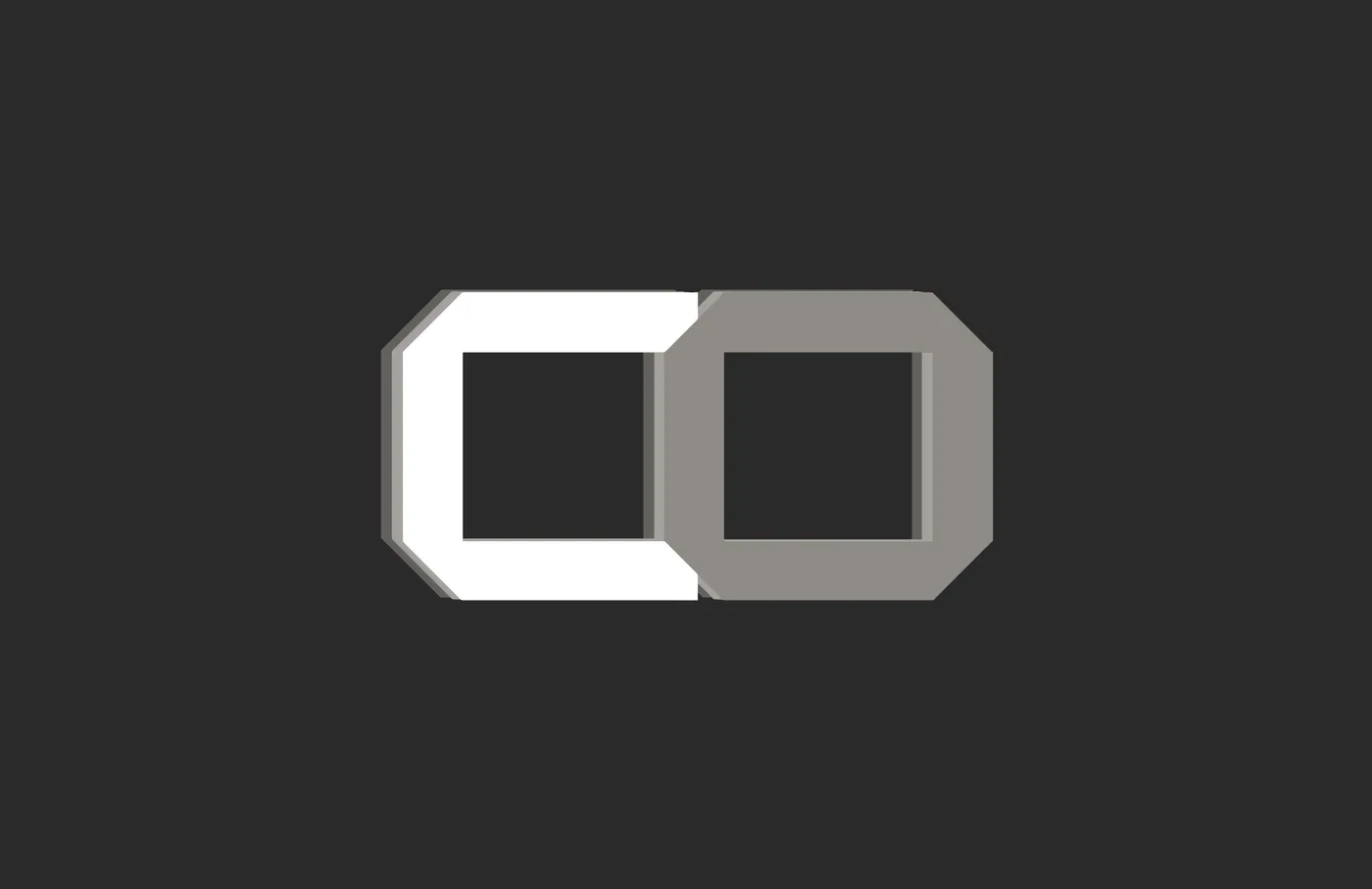
The new identity is called "Concrete & Charcoal": a warm grey palette drawn from fair-faced concrete and steel, with Montserrat as the house typeface. On that foundation we rebuilt the logo - cleanly scalable from a business card to a site-fence banner, in light and dark variants for every application.
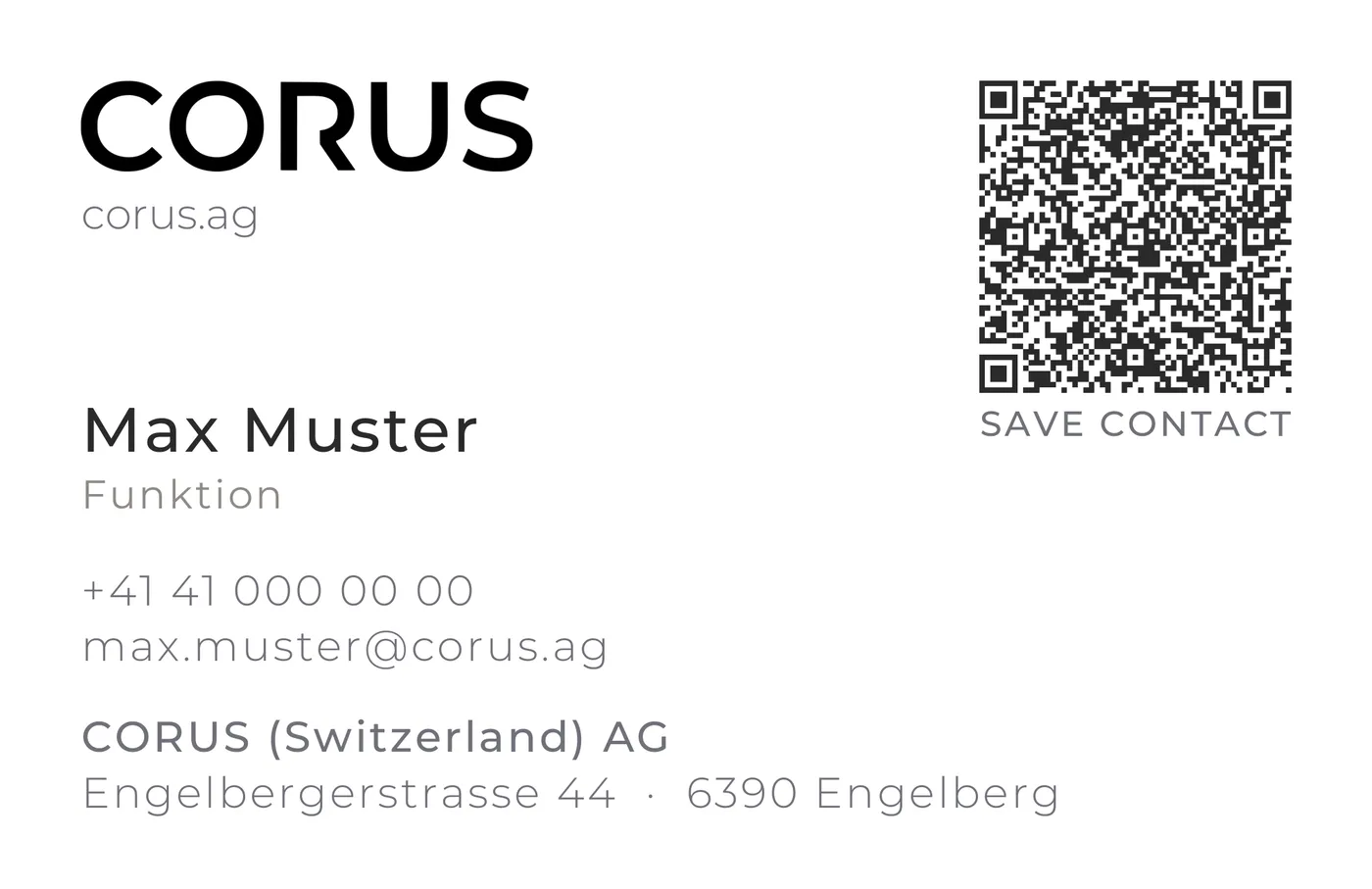
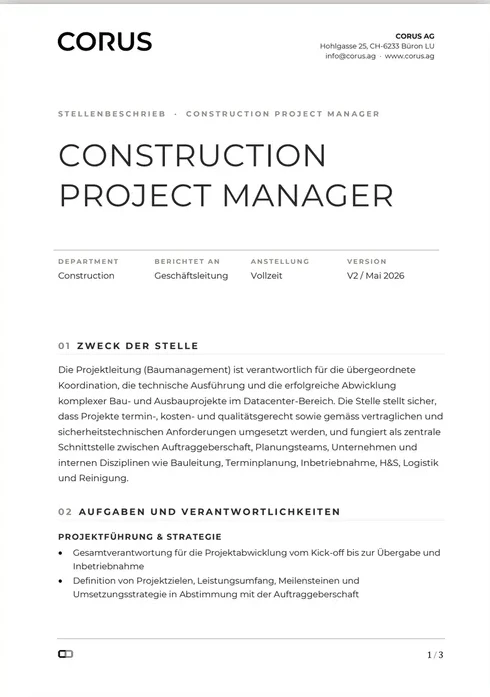
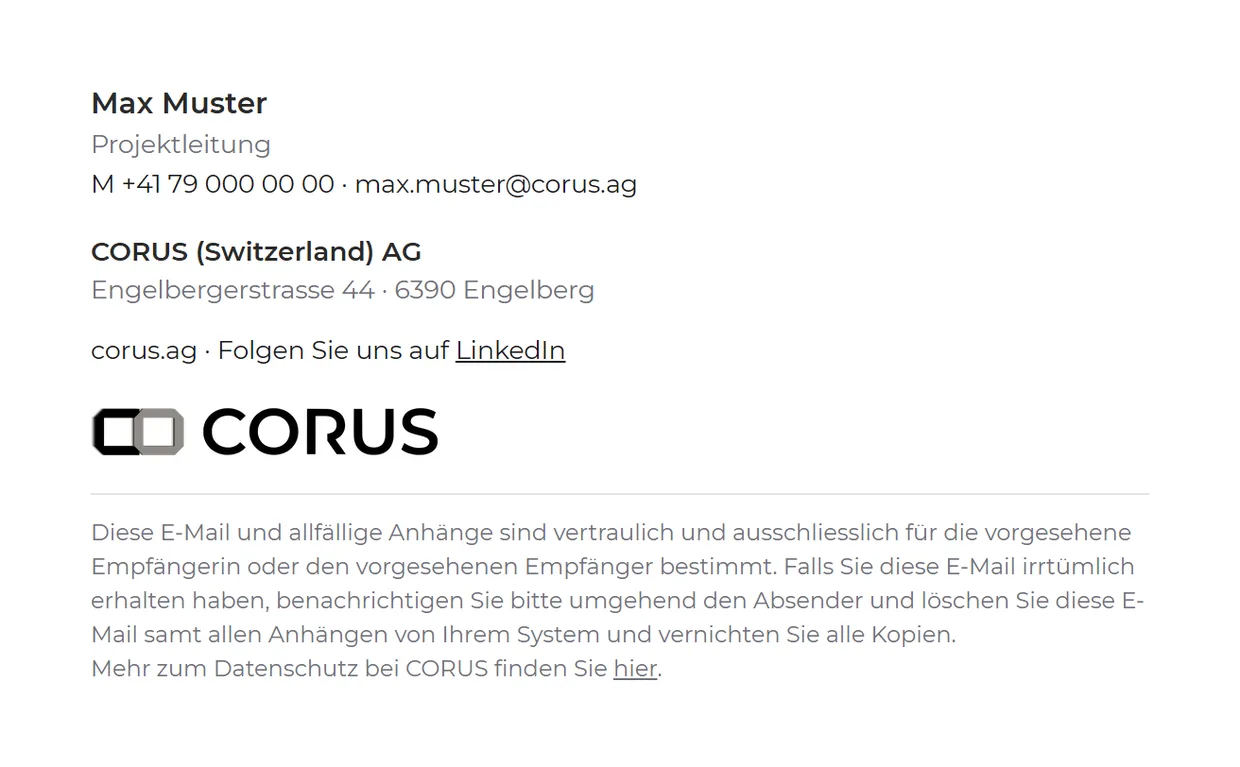
From there, the identity turned into everyday tools. A set of Office templates with embedded fonts and brand colours covers everything from letterheads to employment references to the company presentation. Then the business stationery - cards, letterhead, envelopes - and the email signatures: bilingual, with a logo that stays legible in any mail client's dark mode. Everyone sets up their own signature with a short guide.
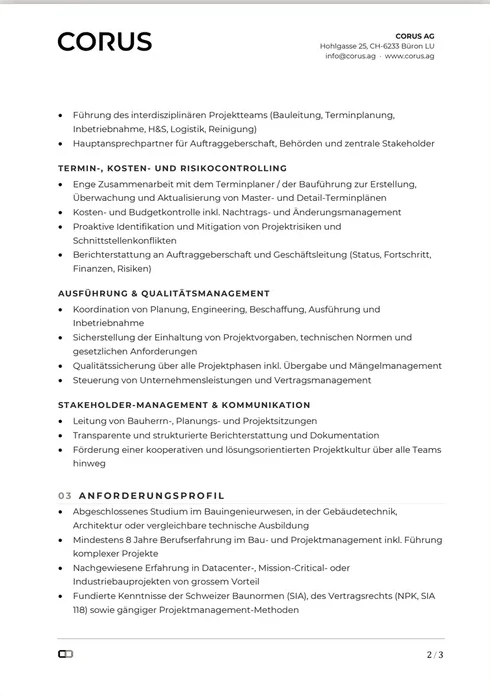
For the construction sites we built a dedicated signage system. CORUS uses it to create new signs in PowerPoint - no designer needed, from fence banners to safety notices.
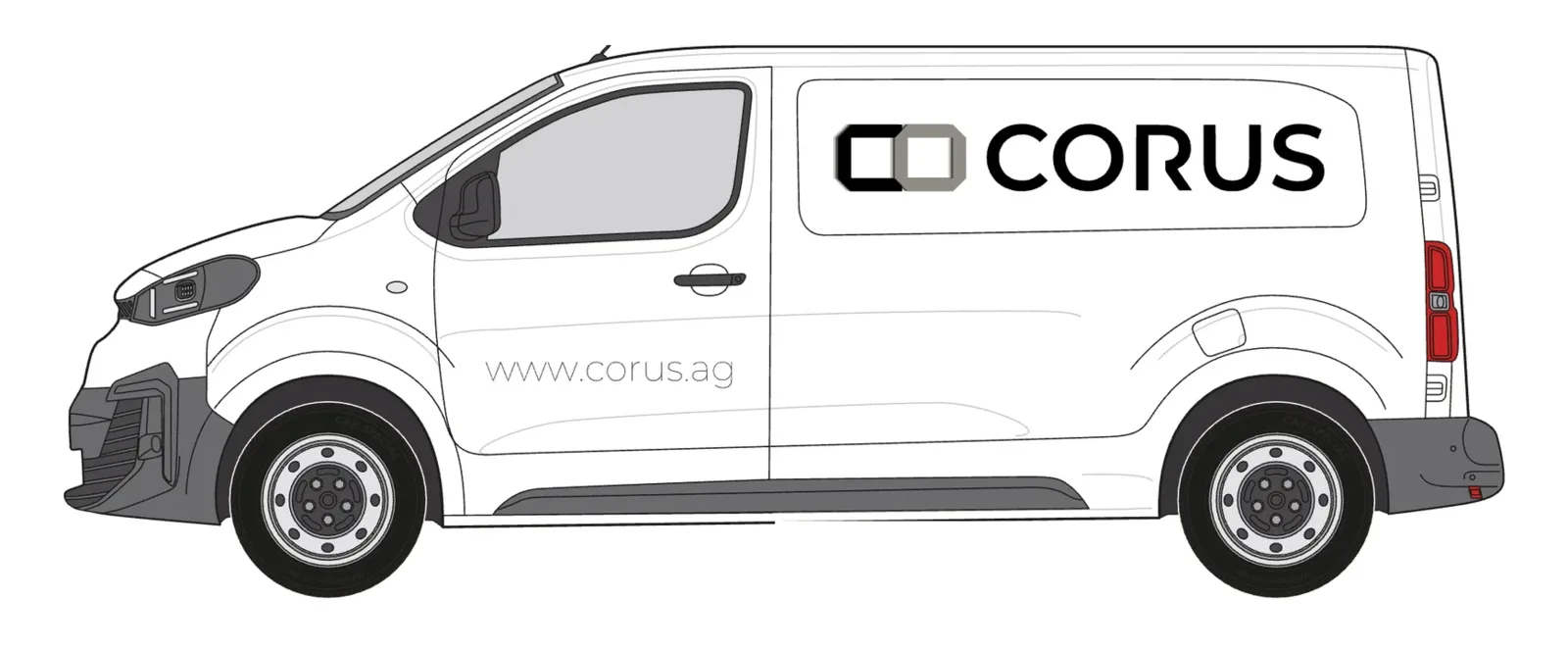
And then the physical world: 10 vehicles were wrapped, from the delivery van to the telehandler. We designed the workwear as a kit per role, from site management to logistics, protective equipment and helmet stickers included. For the tenth anniversary there was a dedicated anniversary seal - and an anniversary bus for the celebration.
Wrappers, printers and workwear suppliers: we researched them, briefed them and walked them through production - up to and including the ordering itself. Getting quotes, delivering print files, checking proofs, chasing deadlines. CORUS decided and approved. We took care of the rest.
The website: corus.ag
The new corus.ag is a complete new build - no site builder, no theme. We host and run it, SSL and basic maintenance included.


Two things mattered most to us. First, upkeep: CORUS edits news, team pages and open positions itself in the CMS, and a change is live in seconds - no ticket to us. Second, the two languages: German and English are fully equal, identical in structure down to the last line. There's no stripped-down second language.
And because a website only works if it gets found, corus.ag is set up so that search engines - and the AI assistants reading along these days - understand the company properly, with every old address forwarding automatically to the new domain.
The brand database
Brand manuals share a well-known fate: delivered as a PDF, read once, forgotten. For CORUS we built our own software instead - brand.corus.ag, a lean, access-protected web app and the third web property alongside corus.ag and the support site.
Everything the brand needs day to day lives there: logo files, colours with digital and print values, typography, the Office templates with preview and download, plus signage and workwear. External suppliers get their own views with exactly the files they need - and anyone who still wants a PDF can export one directly. When a printer needs the logo, CORUS sends a link instead of a folder of attachments.
Deep DiveHow the brand database works - and what's growing out of it - is a case study of its own
Behind the scenes: the migration night
The most invisible part of the project was the most delicate. On the morning of 1 July, the whole team had to be working on new addresses - same mailboxes, same data, same appointments, just on corus.ag. That meant 45 mailboxes, plus Teams, SharePoint and OneDrive. Everything had to stay in place; nothing could afford to go missing.
A switch like that doesn't succeed on the night itself, but in the weeks before it. The plan was reviewed, tested and then rehearsed: two days before the real date, a dress rehearsal ran on the live system with a throwaway mailbox instead of real data. It caught four real bugs that would otherwise have surfaced at midnight.
The night itself was 30 June, in a 10 pm to 2 am window: addresses were switched one by one, each verified before the next. In the morning, the team worked on corus.ag as if nothing had happened. For the first two days we stood by on call, in case an Outlook needed to reconnect or a phone had to sign in again. And the old addresses stay live as silent receivers for another two years - nothing sent there goes missing.
AI as the next step
The fifth area is deliberately the last one in this story, because it is still running: the AI enablement is currently being scoped.
The shape is set. First comes a data-privacy briefing that clarifies what may go into an AI tool at all in a company handling confidential project data. Then tool selection, a short intro session for the whole team, and after that guided one-on-one sessions where everyone applies AI to their real tasks instead of practice examples. Once that ships, we'll rewrite this chapter - with results instead of plans.
That this area comes after go-live is intentional: an AI rollout needs a team that isn't digesting a move at the same time.
Operations after
With go-live, the work shifts from project to everyday. Through the end of July we're on call in case anything snags. After that, the relationship moves into ongoing support: website upkeep, M365 administration, onboarding new employees, answering questions.
There is a dedicated address for it: it-support.corus.ag, a support site for the team, trilingual in German, English and Spanish.
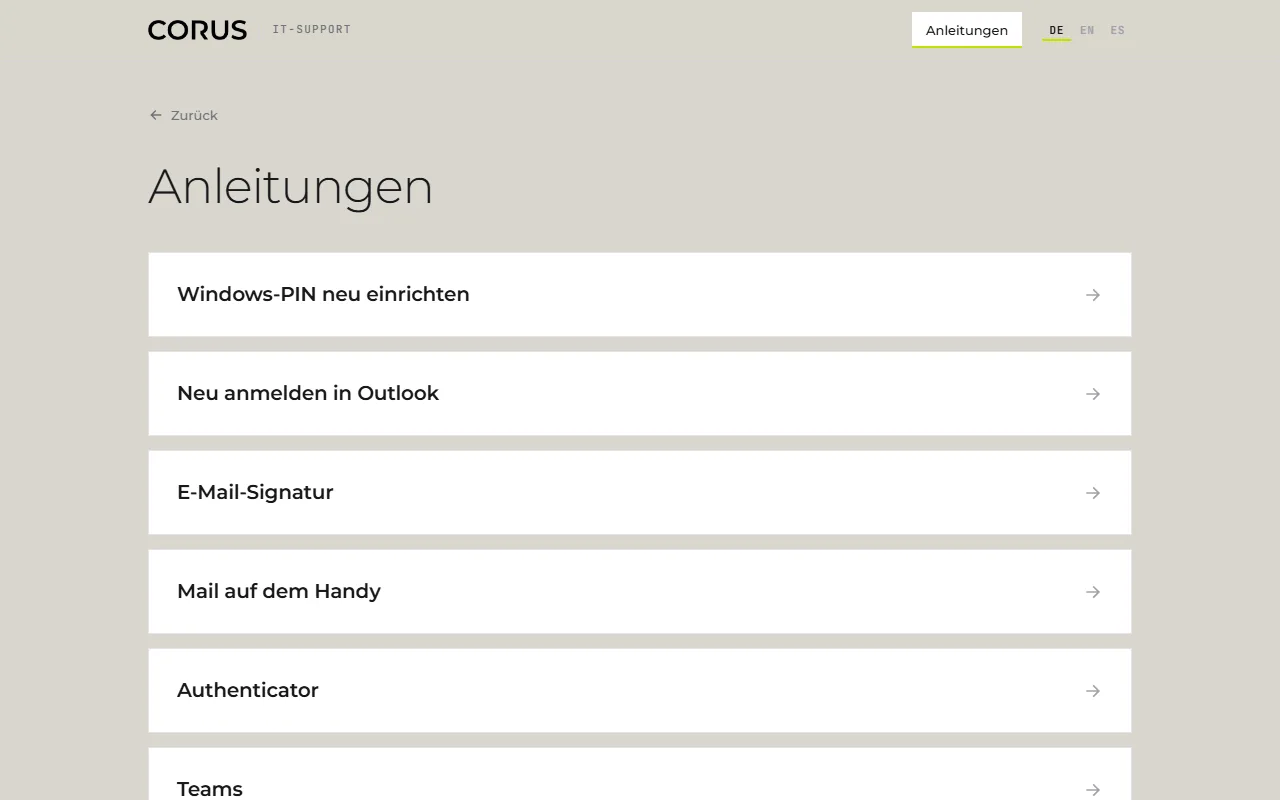
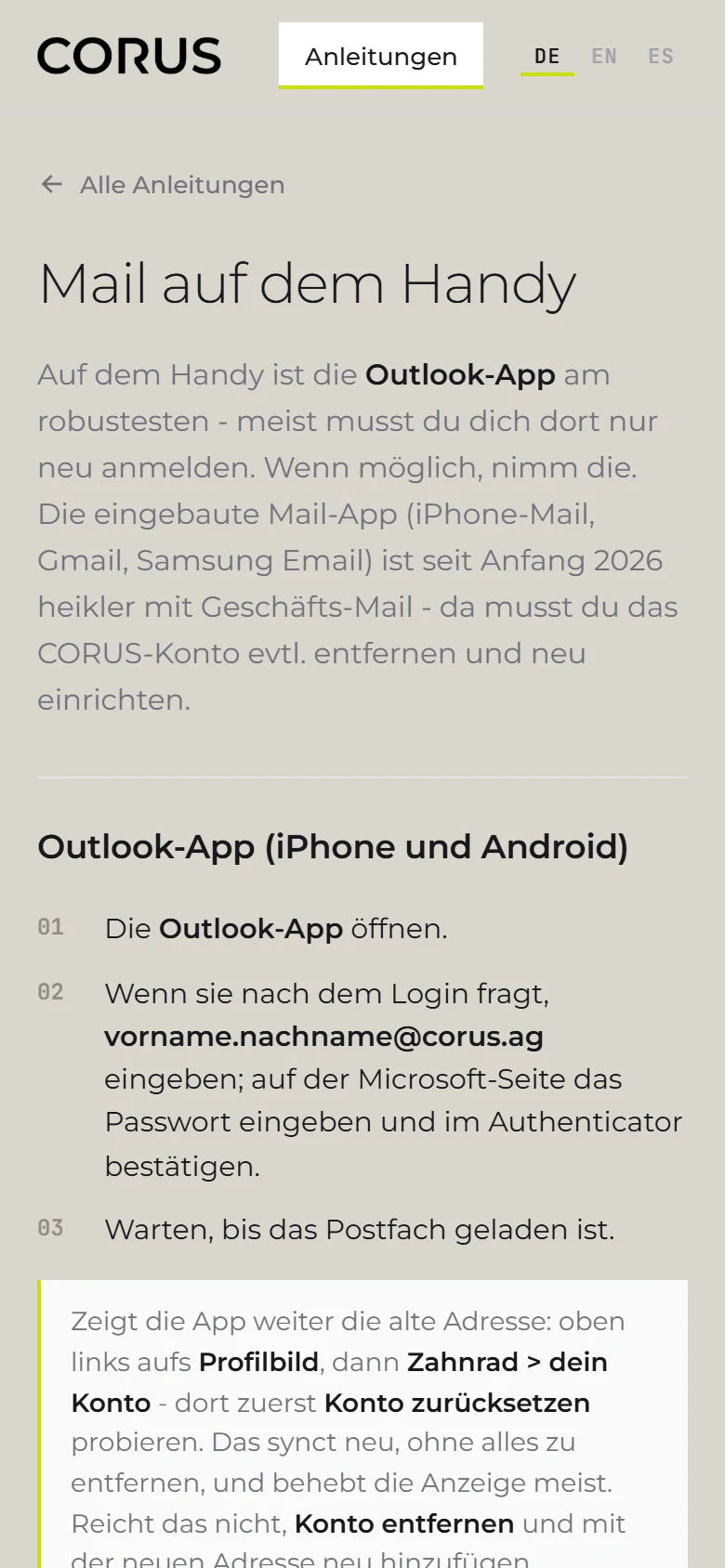
The small jobs matter most here. A new mailbox, an adjusted template, a quick question - things nobody wants to write a project brief for. With us they're part of the deal: a short message is enough. A company of around 30 people doesn't need its own IT department. But it does need someone who feels responsible - for the website just as much as for the mailbox that acts up on a Monday morning. That role stays with us.
One company, one point of contact
On the evening of 30 June, the limited partnership with the long name was still there. By the morning of 1 July there was a company with a new name, a new logo, a new website, new addresses and wrapped vehicles - and a team that simply kept working, as if nothing had happened.
That one partner can do many things is only half the story. The other half shows in the result, when nobody has to coordinate five suppliers: the signature matches the website, the website matches the template, the template matches the site sign - because it all comes from the same place.
You don't have to start with all five areas. Each one is its own way in - and the breadth is there when you need it.